
RaRe² (Human-centred Rapid Reconfiguration of Production and Value Chains in Fast-changing Scenarios) has concluded. Funded under Horizon Europe, the initiative was dedicated to developing solutions to make production systems and value chains more flexible, resilient and able to adapt rapidly to market changes, crises and supply disruptions.
The initiative brought together a multidisciplinary European consortium, coordinated by Fraunhofer IWU and including the Department of Mechanical Engineering at Politecnico di Milano, with the research group led by Prof. Marcello Colledani. RaRe² developed and validated a modular digital ecosystem integrating tools for the early identification of reconfiguration needs, production and logistics digital twins, decision support, production optimisation, partner search and skills-gap analysis. Its objective was to enable companies to reconfigure processes, resources and supply-chain relationships more rapidly in response to unexpected events, while maintaining continuity, efficiency and sustainability in production activities.
A central element of the initiative was its human-centred approach. Alongside digital technologies, RaRe² addressed workforce upskilling and the adoption of reconfigurable tools for assistance and training. This integration of technologies, organisation and people is essential to ensure that system reconfiguration is not only technically feasible, but also practically adoptable in industrial contexts.
In particular, the DMECC group led the development of methodologies and tools for the Manufacturing Process-Chain Digital Twin, aimed at evaluating alternative configurations of production lines and resource allocation. The approach combines state-based models of production modules, factory data and discrete-event simulation to estimate both long-term performance, such as production capacity and throughput, and short-term operational indicators. The tools developed were also integrated with virtual-reality environments to support the immersive visualisation and collaborative validation of layouts and production configurations.
The methodology was applied, among others, to the Fontana industrial case. A digital twin of the assembly line was developed to compare the traditional configuration, based on cells dedicated to individual vehicle models, with a reconfigurable Multi-Project Line. The model enabled the analysis of layouts, resource utilisation, product mix, and the number of robots and stations required, virtually assessing the feasibility of integrating multiple projects within the same production infrastructure before any possible physical implementation. Virtual reality made it possible to explore and discuss design solutions more directly, promoting the joint involvement of designers, production managers and operators.
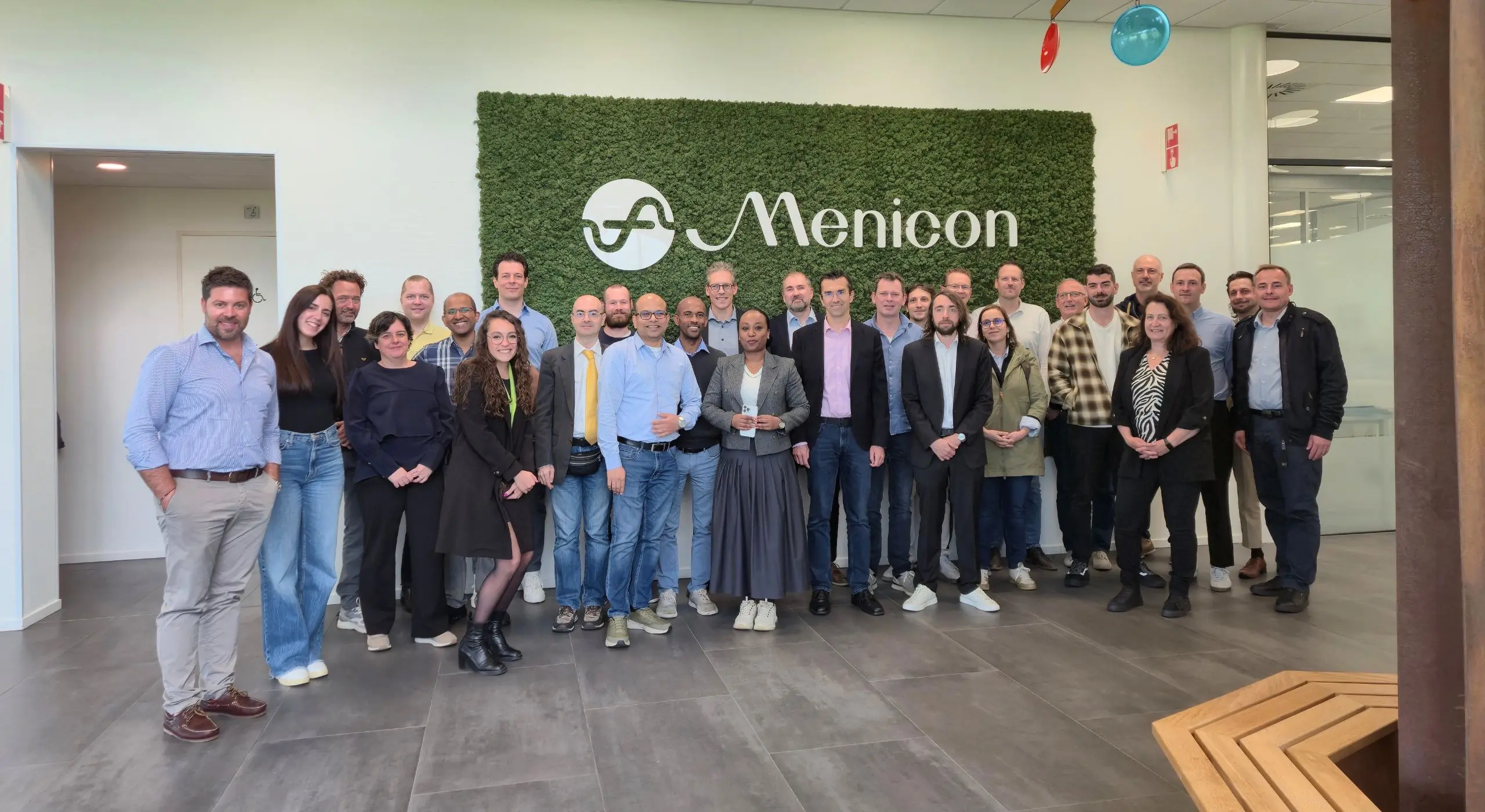
The Final Review, held on 12 June 2026 in Emmen, the Netherlands, confirmed the impact of the results achieved and of the industrial demonstrations carried out by the consortium. The RaRe² experience provides concrete foundations for transferring and exploiting its results within the European manufacturing ecosystem.