
How can different AI technologies work together to make manufacturing more intelligent, autonomous and connected? And how can this autonomy be developed in a way that remains safe, explainable, controlled and trustworthy?
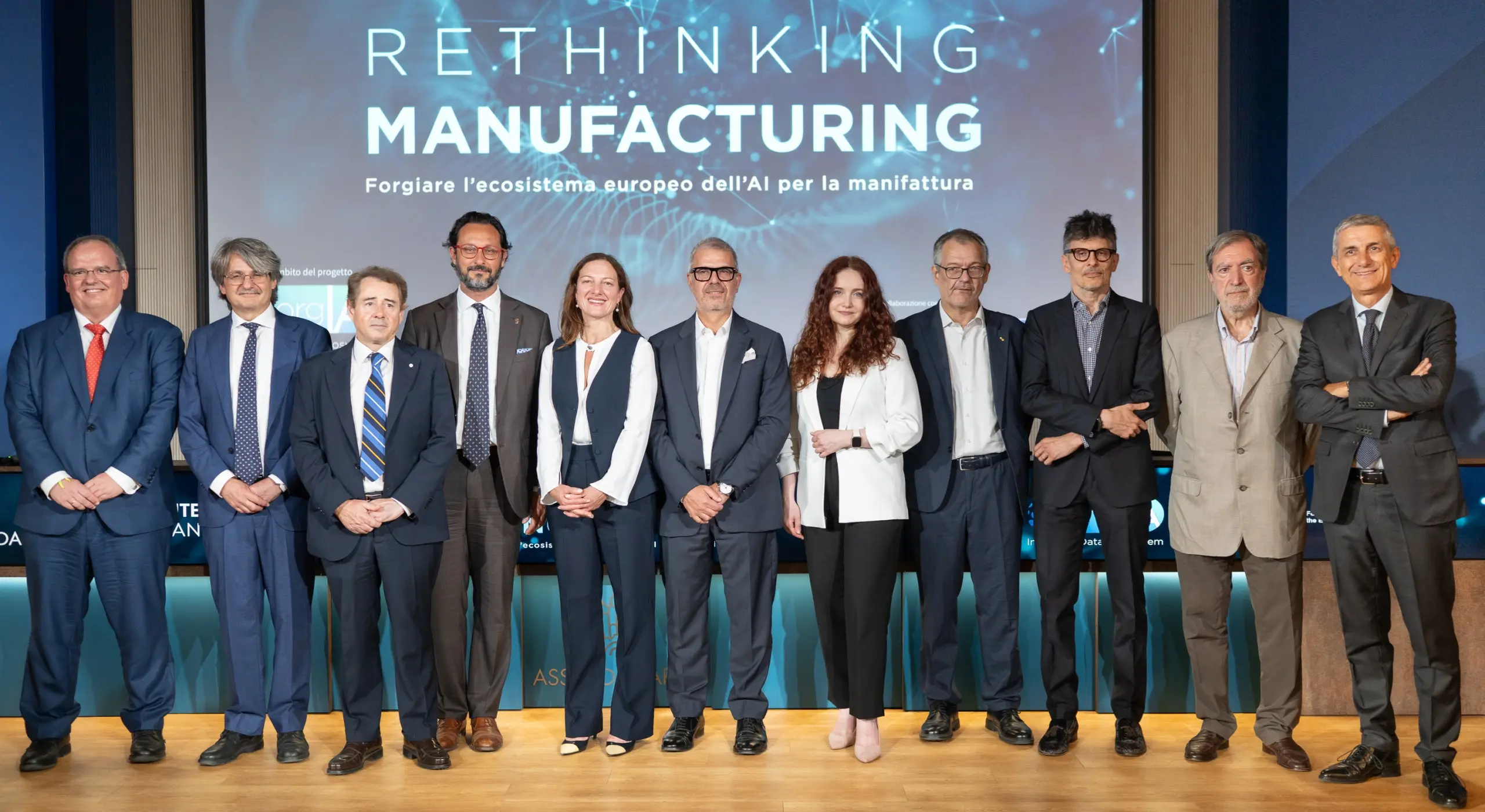
These were some of the key questions at the heart of the Scientific & Technological Research Meeting, held on 17–18 September at Politecnico di Milano, entitled “Scientific and Technical Pillars for Industrial Foundation Models”, an event that brought together partners from euroFMX, the European flagship initiative working to advance the next generation of trustworthy, open and manufacturing-focused Generative AI by bringing together European technologies, open-source ecosystems and industrial knowledge to support more autonomous and connected manufacturing.
The meeting provided two days of scientific and technical discussion, creating a dedicated space to connect different areas of research, identify common challenges, and explore how the different pieces of the euroFMX vision can work together.
The focus was on the project’s interconnected technical areas and on how the different euroFMX components can interoperate as part of an integrated industrial AI architecture and runtime. Partners explored the role of knowledge graphs in enabling industrial AI systems to understand manufacturing environments, reason about them and act more autonomously, while also addressing how such autonomy can remain safe, controlled, explainable, governed and certifiable. Particular attention was given to how autonomy requirements and capabilities may evolve across different levels of manufacturing, from individual production assets and processes to entire factories and supply chains.
The occasion also provided dedicated time for partners to work in depth on the scientific and technical topics at the core of the project. The discussions were used to align research objectives and approaches, clarify the definitions and concepts underpinning planned developments, establish priorities, coordinate upcoming activities and identify opportunities for collaboration across the project. The topics covered a broad range of areas, from data foundries and the industrial AI computing continuum for operational optimisation, to GenAI models, dynamic and symbiotic agentic systems, autonomisation tools, and digital platforms for manufacturing intelligence and automation.
More than simply taking stock of ongoing research, the meeting served as a space to connect research directions and strengthen the links between the different building blocks of euroFMX.
The outcomes and insights emerging from these discussions will now feed into the next stage of the project, with the upcoming October event shifting the focus towards applied research in the real-world environments of the project’s pilots, where the scientific and technical developments discussed within euroFMX can be explored in practice.