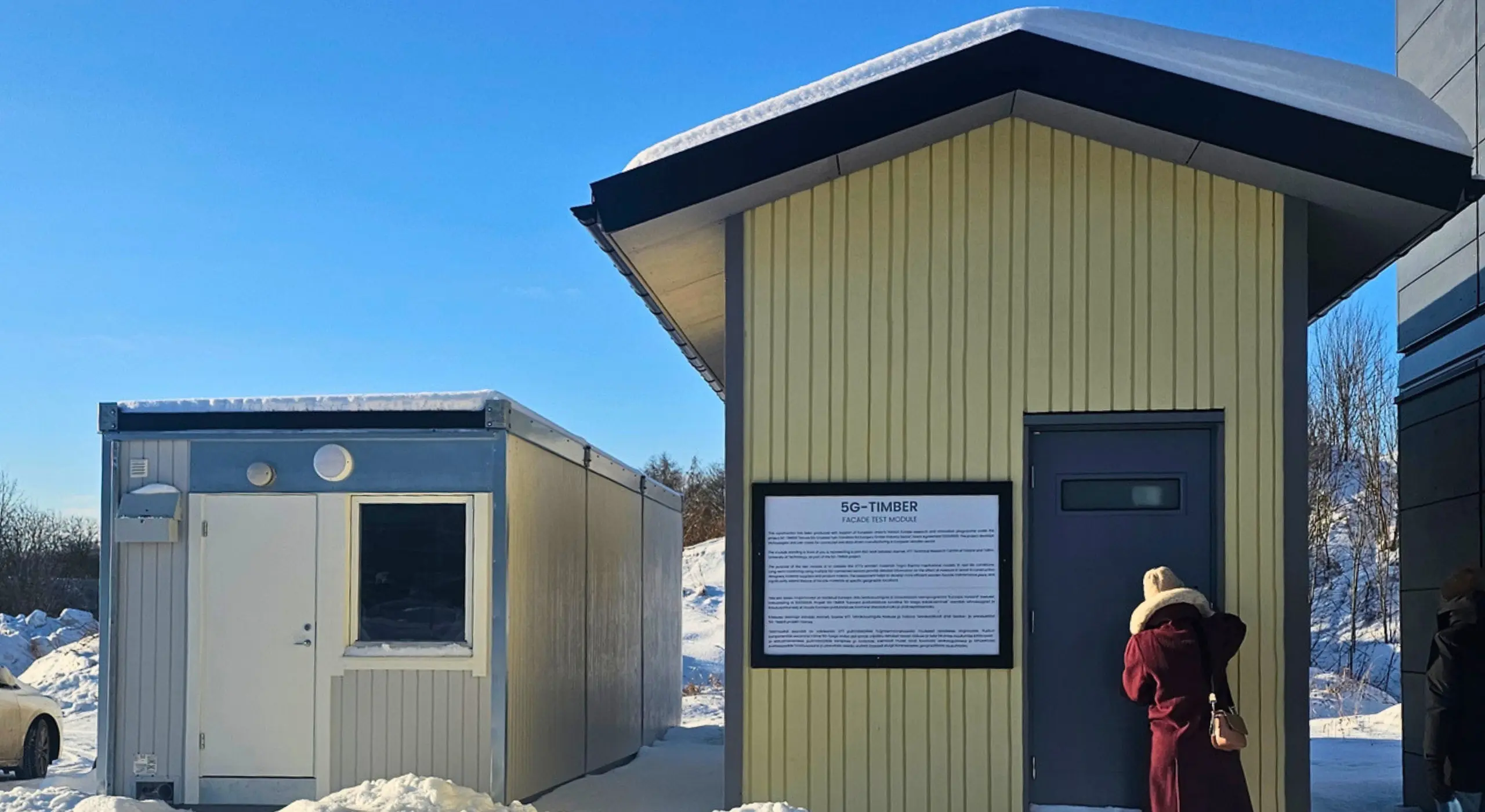
The digital and sustainable transformation of the timber value chain represents one of the key challenges for European industry. Within this context, 5G-TIMBER, an initiative funded by the Horizon Europe programme, explored the potential of private 5G networks, Digital Twins and artificial intelligence to enable new production models that are safer, more efficient and more sustainable across the entire timber value chain.
The research group of the Department of Mechanical Engineering at Politecnico di Milano, coordinated by Prof. Marcello Urgo and involving Prof. Giorgio Colombo, Marco Rossoni and Francesco Berardinucci, made a significant contribution to the development of advanced solutions for worker safety, decision support and the integration between the physical and digital worlds. Research activities focused in particular on the use of industrial Digital Twins, computer vision systems, and localisation and hazard detection techniques, applied to real industrial contexts such as sawmills and modular timber factories.
One of the most relevant results concerns the development of dynamic hazard area detection systems, capable of combining data from cameras, sensors and industrial machines with digital models of the production environment. These solutions enable the real-time identification of risk situations, taking into account the movement of operators, machines and loads, and support the adoption of preventive measures, resulting in tangible improvements in workplace safety.
A further key contribution of the research group involved the development of a Digital Twin of an industrial packing machine, designed to support both off-line optimisation of production parameters and on-line monitoring and optimisation of operations. The Digital Twin integrates physics-based process simulations with field data, allowing alternative scenarios to be analysed, operational configurations to be evaluated and production bottlenecks to be identified without interfering with the real production system. In parallel, the project demonstrated how the combined use of Digital Twins and virtual reality (VR) technologies can effectively support operator training activities.
Overall, the results of 5G-TIMBER confirm the strategic role of advanced digital technologies in supporting the twin green and digital transition of the timber industry. The solutions developed and validated in real industrial environments lay the foundations for future commercial applications and for the evolution of European standards in manufacturing and construction, strengthening the competitiveness of the sector at a European level.