
The APOLLO project focuses on innovating the production of clean energy devices through advanced laser-based manufacturing techniques, with an emphasis on scalability, flexibility, digitalization, and sustainability. The project will be developed in collaboration between DMEC and IMA Group, ensuring the industrial transfer of high-end advanced manufacturing research. Funded by the Italian Ministry of University and Research (MUR) within FISA, the project kicked off in January 2026 and will run for five years.
The principal investigator of APOLLO is Prof. Ali Gökhan Demir, with the collaboration of Prof. Mara Tanelli and Prof. Andrea Matta. Through the combination of advanced laser processing, digital manufacturing, simulation, and industrial prototyping, APOLLO seeks to strengthen the technological foundation for next-generation clean energy products.
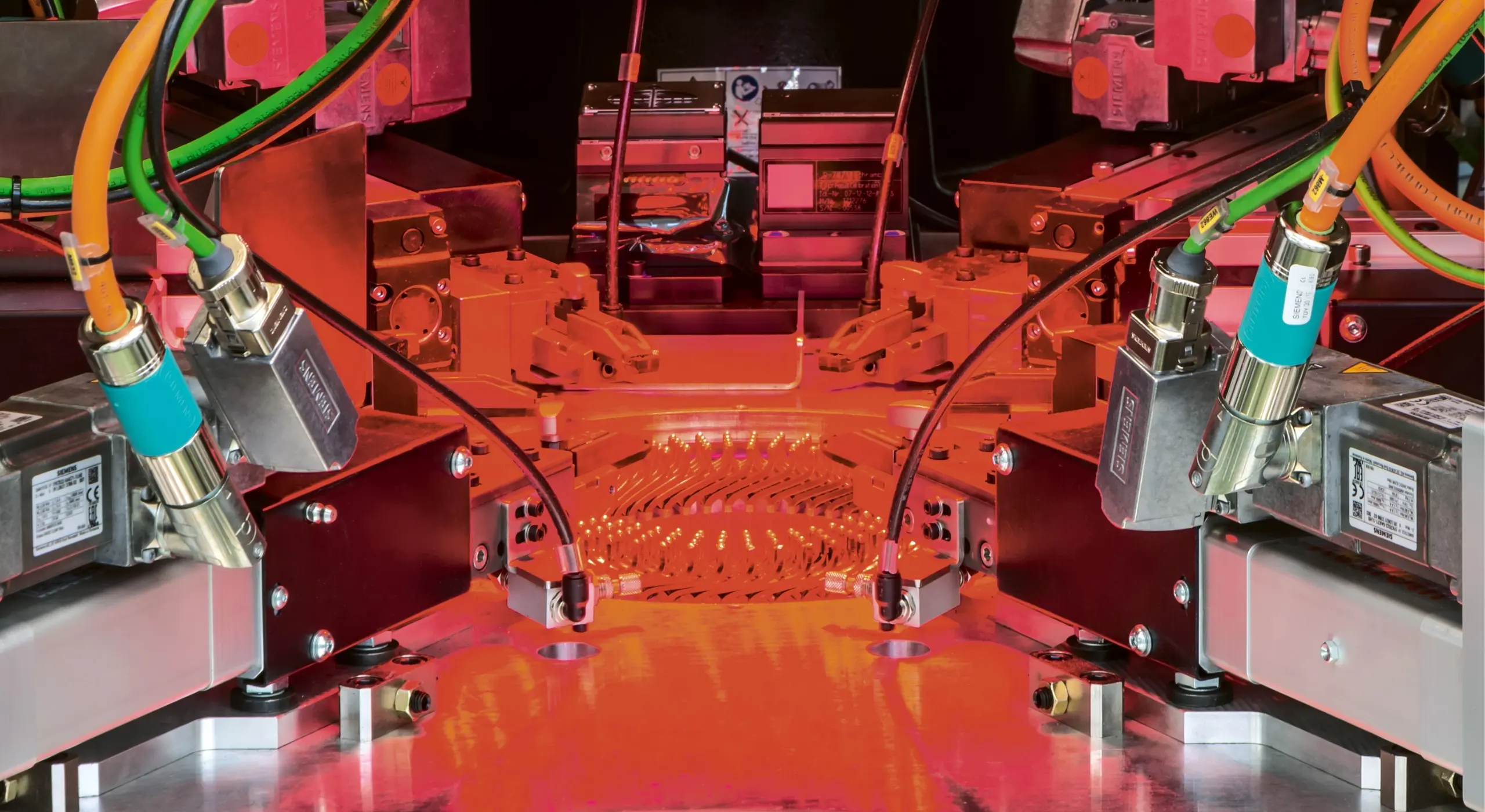
The project aims to improve the manufacturing of key components for clean energy technologies, including Hairpin Stators, Lithium-Ion Batteries, and Fuel Cells, while also enabling future applications. It leverages laser technology to enhance processes such as welding, cutting, and surface texturing, with the goal of developing more efficient, reliable, and adaptable production methods for the electric mobility industry.
A central objective of APOLLO is to deepen the understanding of laser-material interactions with novel materials derived from these applications, ranging from metals to ceramics and polymers. This knowledge will support the optimization of laser processes and the development of versatile laser systems tailored to the diverse requirements of clean energy devices. The project will implement state-of-the-art laser beam-shaping technologies in space, time, and wavelength. The developed next-generation laser process solutions will include hybrid-wavelength laser systems, parallel processing with high-power systems, and pulse and burst shape control.
APOLLO also integrates advanced digital tools and process simulation. Multi-physics models will be developed to simulate laser-material interactions, helping to refine process parameters while reducing the need for extensive physical trials. Advanced closed-loop process control strategies will help ensure quality in repeated laser processing tasks. Digital twin technologies will be used at production-line and process-station levels to define new strategies for improving production quality.
Another major goal of the project is the creation of scalable manufacturing prototypes. These prototypes will demonstrate laser-driven processes for the production of critical components used in batteries, fuel cells, and electric drives. Their adaptability will allow manufacturers to respond flexibly to changing production needs, while their sustainability-oriented design will support reductions in energy consumption, material waste, and overall environmental impact.