
What if industrial systems automatically transform their own data into intelligent, operational Digital Twins capable of predicting issues, optimising processes, and supporting more sustainable decisions in real time?
This is the vision behind the recently and successfully concluded European Horizon project AUTO-TWIN, coordinated by the Politecnico di Milano – Department of Mechanical Engineering, which focused on the development of a new generation of data-driven Digital Twin technologies designed to make complex industrial processes more transparent, efficient, and circular.
By combining automation, AI-driven analysis, lifecycle traceability, and secure data exchange, the project established an integrated framework for transforming heterogeneous industrial data into intelligent systems for monitoring, optimisation, predictive maintenance, and decision support across multiple industrial sectors, enabling a shift towards more efficient, transparent, and data-driven industrial operations.
In this context, the project successfully demonstrated the industrial applicability of automated Digital Twin technologies in real operational environments. Significant operational and application impacts were achieved through the implementation and validation of the proposed approach in real industrial settings, including a substantial reduction in development time and resources, improved operational performance, and high predictive accuracy with low error margins.
Across all use cases, the project integrated Digital Twin technologies with Circular Economy principles, including lifecycle traceability, Digital Product Passports, secure data exchange infrastructures, and support for resource optimisation and waste reduction. The project demonstrated strong cross-sector replicability and validated its solutions in heterogeneous industrial environments, confirming robustness and scalability.
In the use case related to the sterilization of reusable surgical instruments, Digital Twin technologies were applied to all phases of the sterilization cycle and related management of surgical medical devices for enabling their reuse. The solution improved workflow visibility, equipment utilisation monitoring, and operational bottleneck identification. It also strengthened traceability across sterilisation cycles and supported more efficient and sustainable reuse processes.
The use case focused on recycling PET from waste streams and textiles enabled the transformation of heterogeneous and partially structured industrial data into structured process representations. This allowed better understanding of plant operations, improved material recovery processes, and supported continuous optimisation of chemical recycling workflows.
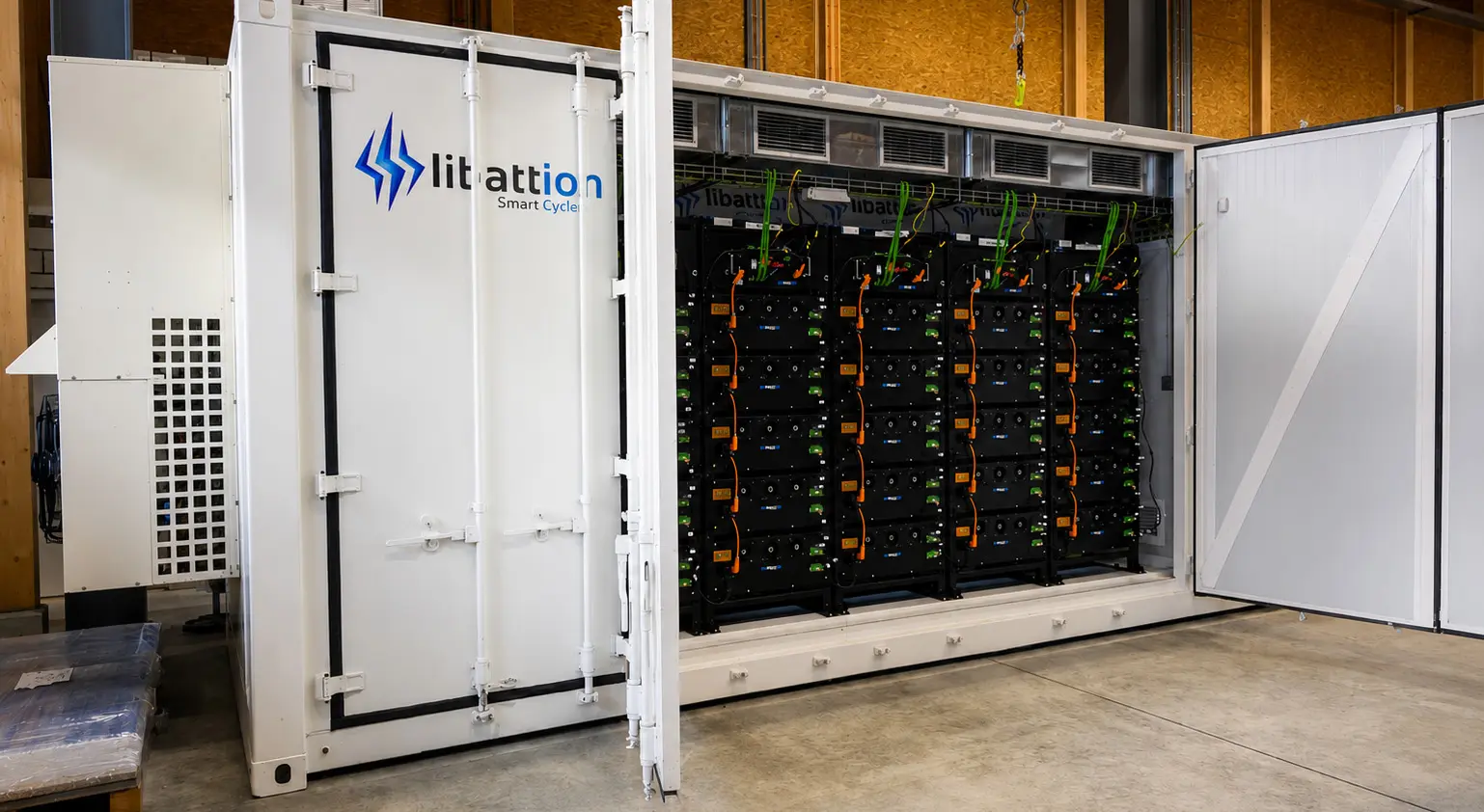
The use case related to the repurpose of battery packs and their management led to the development of a Product Digital Twin to support continuous monitoring, anomaly detection, and lifecycle traceability of batteries. Through Digital Battery Passports, the system enabled predictive maintenance, extended battery lifetime, and supported second-life strategies for energy storage systems.
The project also received two important recognitions from the European Commission through the publication of two innovative project results on the public Innovation Radar website, which identifies and promotes high-potential innovations developed within EU-funded projects, highlighting the contribution of Politecnico di Milano as a key innovator for the valorisation of European research results.
The first innovation, Digital Services for Operations of Green Gateway, was developed by Politecnico di Milano in collaboration with CORE Innovation Center and Koç University and concerns digital services supporting the operational management of sustainable logistics gateways.
The second innovation, Automatically Generated and Autonomous Digital Twins: An Integrated Pipeline for Generation and Update of Circular Digital Twins, was developed together with Technology Transfer Systems S.r.l. and Technische Universiteit Eindhoven and proposes an integrated pipeline for the automatic generation and updating of Digital Twins to support applications oriented towards the circular economy.
The project generated a significant socio-economic contribution as well resulting from the adoption of Digital Twin technologies in industrial contexts, through the introduction of automation and user-oriented tools, supported by structured upskilling and reskilling pathways for industrial workers.
Through knowledge graph–based representations of industrial data and simulation data, combined with advanced AI integration, the project established a foundation for more explainable, interoperable, and intelligent next-generation Digital Twin systems.