Ski mountaineering has been an Olympic discipline for the first time at the 2026 Milan-Cortina Winter Olympics, and the race formats chosen for this inaugural event were the sprint and mixed relay. While not unprecedented, having been featured for several years in the World Cup and World Championships, these types of races are relatively new and with less tradition than traditional long-distance competitions in harsh alpine environment. They take place on prepared tracks along the slopes, with the sprint lasting approximately 3 minutes (about 2:30 for top male athletes and 3 minutes for women, including uphill, downhill, and set-up changes). The mixed relay is a race in which a man and a woman alternate in sections lasting approximately 7 minutes for the man and about a minute longer for the woman, with two uphill, two downhill, and the associated transitions, to be repeated twice for each.
Compared to long events, the dynamics of the movement and the progression technique differ profoundly, as do the metabolisms involved: short, very intense races rely more on anaerobic processes and on the use of carbohydrates than longer efforts that have a relevant contribution on the aerobic metabolism with fat as an energy source.
Optimizing the execution of the athletic movement and defining a training program aimed at improving the metabolisms involved are of fundamental importance to excel in these disciplines.
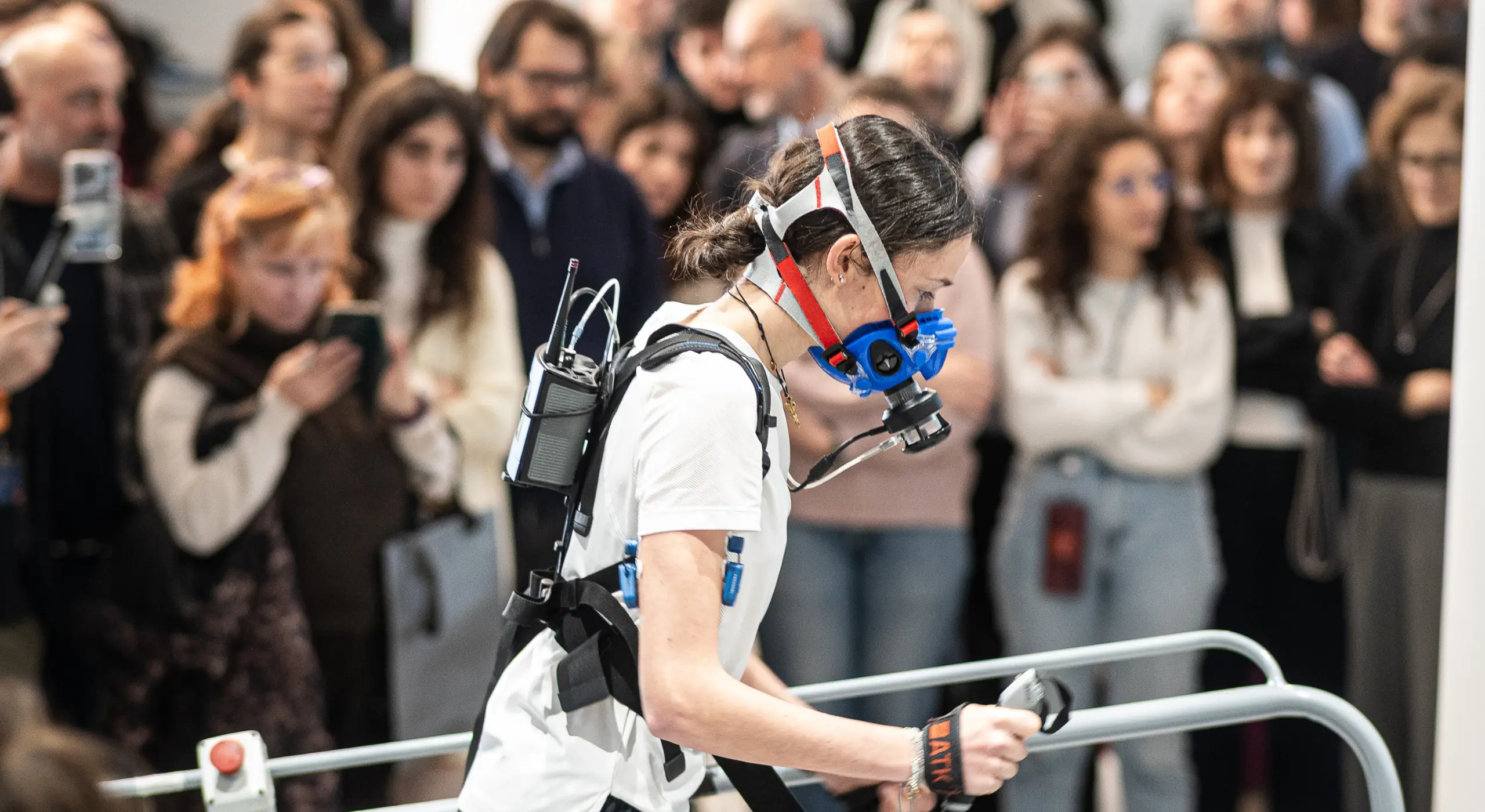
On these topicsa research is underway in the E4Sport laboratories, specifically at the Human Performance Lab at the Lecco campus, in collaboration with the FISI (Italian Federation of Winter Sports) Central Alps Regional Committee. Professors from the Department of Mechanical Engineering (Marco Tarabini, Carlo Gorla, and Diego Scaccabarozzi) and DEIB (Manuela Galli) are participating.
With a typical engineering approach, the activity aims to provide support to athletes and coaches in developing race strategies and optimized training programs based on monitoring metabolic, biomechanical, and mechanical parameters.
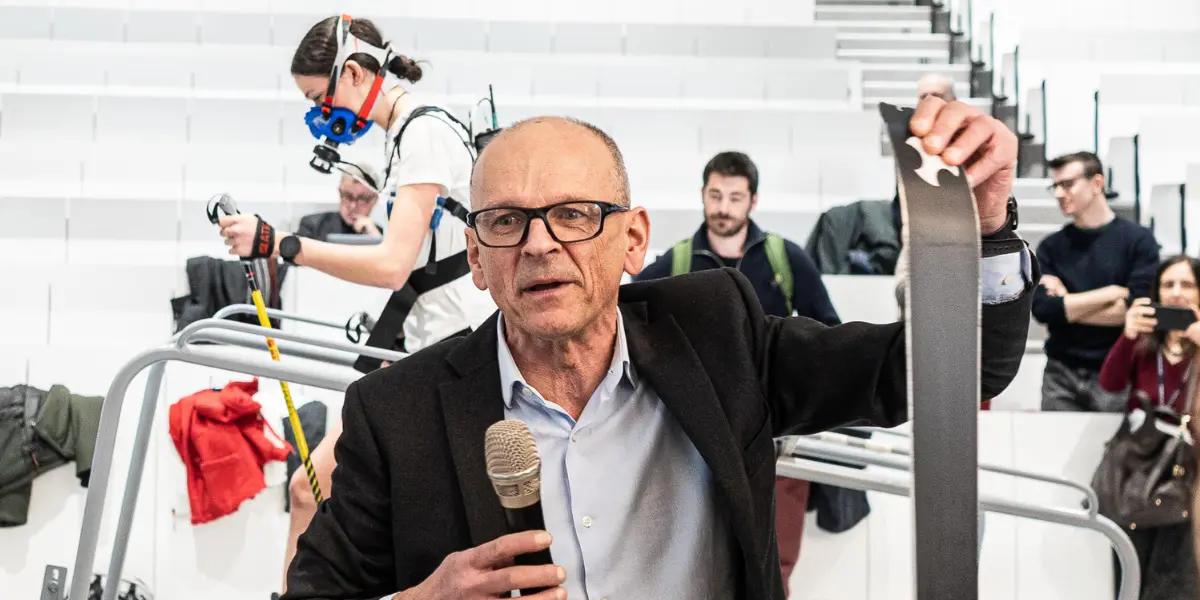
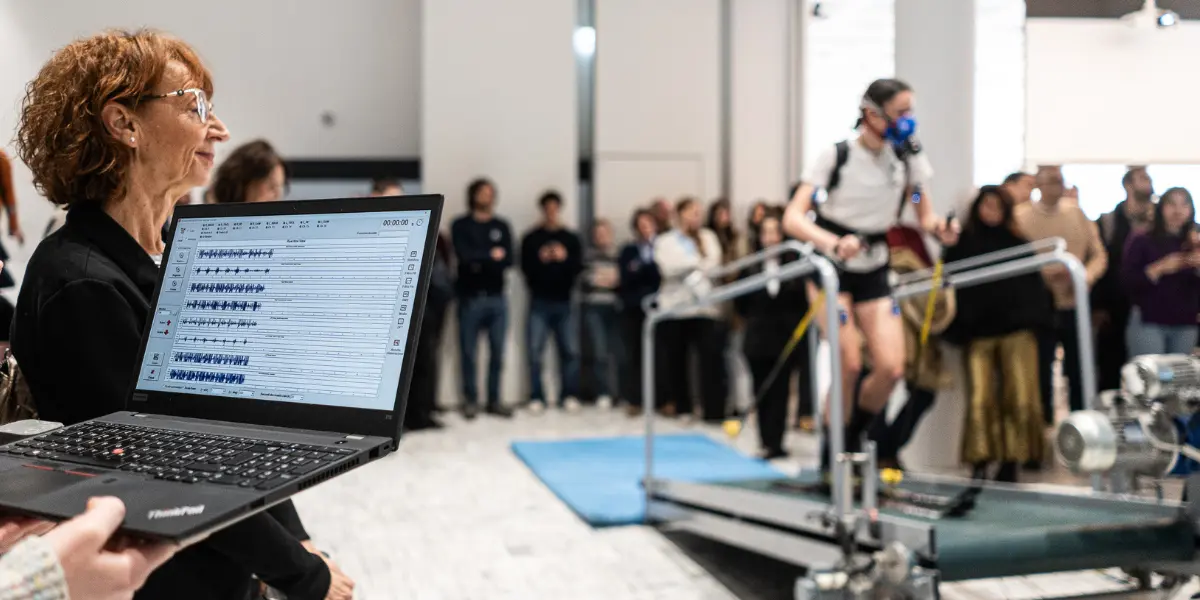
The collaboration developed in successive phases: from the initial laboratory tests on a treadmill specifically designed for ski mountaineering, to field tests on both snow-covered terrain in winter and grass in summer, the athletes were subjected to tests in which the following parameters were measured, depending on the execution technique, speed, and slope:
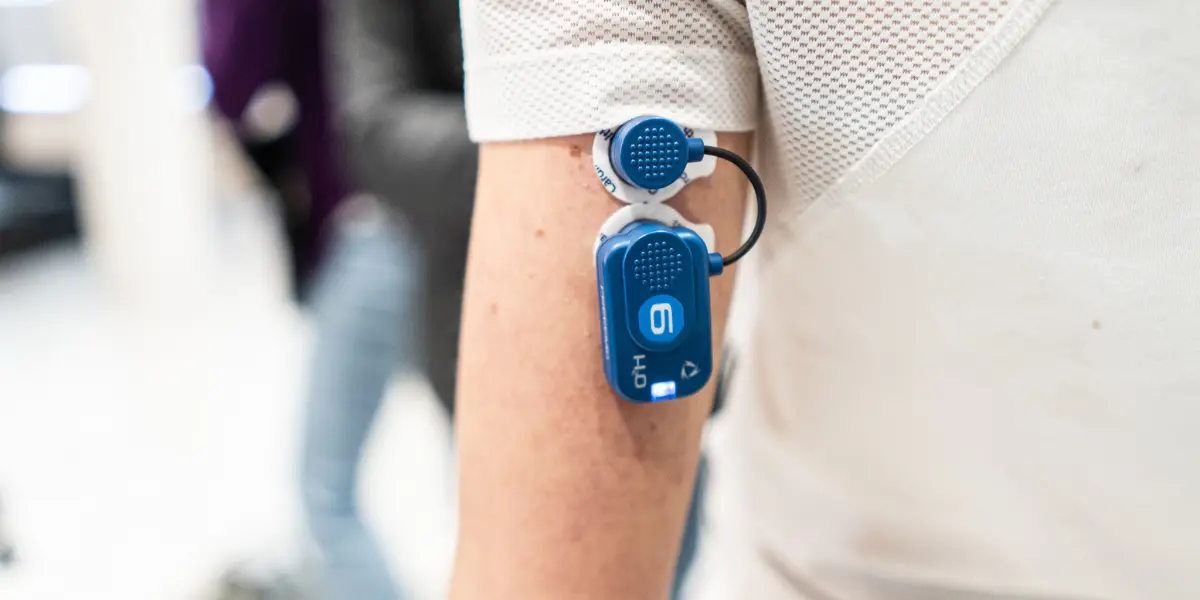
- oxygen consumption, carbon dioxide emission and their ratio (RER), using a metabolimeter
- muscle activation of the muscles primarily involved, by surface electromyography
- Upper limb thrust, using specially instrumented poles (duration of thrust, force progression over time, angles)
- Lower limb thrust using sensor integrated insoles
- Blood lactate through samples
- Heart rate
- Position tracking along the course (field tests), with calculation of step frequency and forward and climbing speed.
Data analysis and correlation provided technicians, coaches, and athletes with quantitative information to support the development 0 training programs.
The Higher Education Institute “Alberti” in Bormio also collaborated on these activities and, thanks to Professor Arrigo Canclini, provided complementary instruments to those of Politecnico and also the knowledge coming from many years of experience in the field of winter sports.
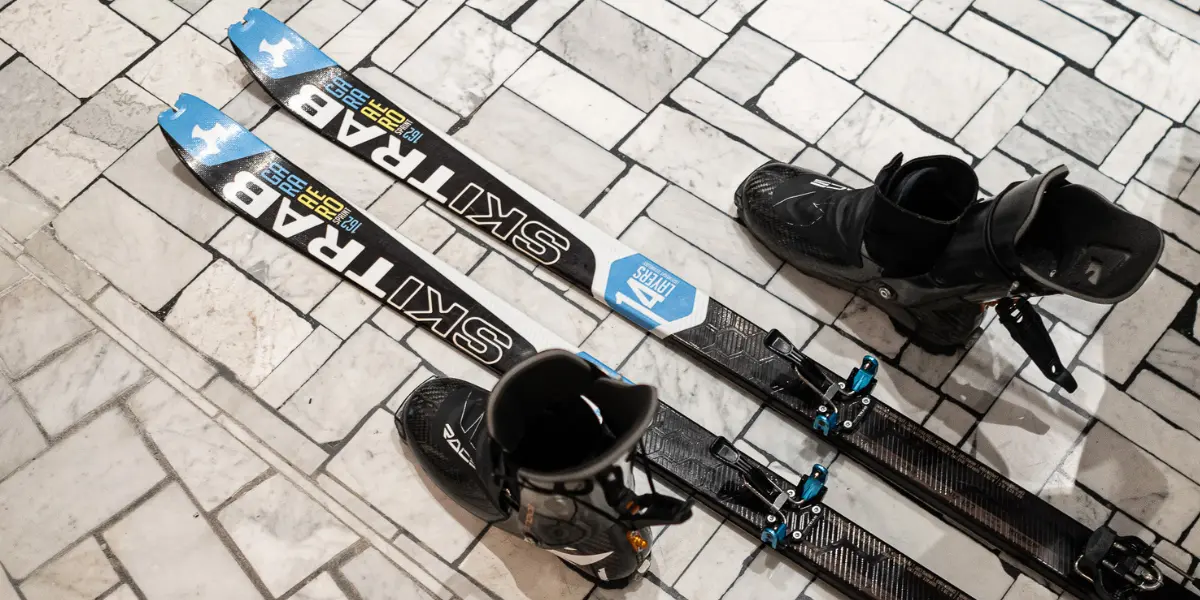
Another phase of the research is now focusing on the study of equipment and accessories capable of favorably influencing the effectiveness and efficiency of athletic movements: after preliminary theoretical studies, the first prototypes have now been built.For this aspect too, the answer lies in data analysis, which is the only tool that can quantitatively confirm any improvements attributable to the equipment.
Several athletes from the Central Alps Regional Committee's youth teams participated in our tests, including athletes who were grown in the regional committee, particularly in the Albosaggia and Alta Valtellina teams, but who now compete as professionals. Among them Giulia Murada of Centro Sportivo Esercito who participated in the Olympic sprint, Rocco Baldini, of the same team, gold medalist in ski mountaineering at the Lausanne Youth Olympics, and Katia Mascherona, an athlete of the Fiamme Gialle. We would have liked to see them all at the Olympics, but the Italian quota consisted of only two women and one man (despite competing in two different disciplines), and this prevented athletes who met all the requirements and who would have deserved it from taking part in the event.
I attended the debut in Bormio as a spectator along the sprint race course, and I was able to appreciate that the participation in the Olympic Games proved to be very positive for the ski mountaineering movement. There was a large turnout, from various nations, even in the sprint race, which took place on a weekday and in heavy snowfall, as forecast had predicted. The media also gave wide coverage to the new discipline: the race formats chosen, although they sparked some discussion among skimo purists, proved suitable for attracting the interest of even those unfamiliar with this sport, thanks to their spectacular nature, intensity, and immediate understanding of the competitive aspects. Italy performed well, coming within a whisker of a medal, which would have been more than deserved, especially in the women's sprint race. Given its success, ski mountaineering will certainly be at the 2030 French Olympics, likely with multiple disciplines. This will be an opportunity to aspire to even greater results, with the hope that the Human Performance Lab can help athletes in achieving them, involving additional competences in the Lecco Campus if necessary, in addition to those already present in the first phase of the research.
This work was conducted by a research team consisting of Carlo Gorla, Marco Tarabini and Diego Scaccabarozzi.