When thinking of winter sports such as downhill skiing or luge, technique, courage, and athletic preparation quickly pop into one’s mind. Less visible, but equally decisive, is the contribution of aerodynamics. At speeds that can exceed 130–150 km/h, air resistance becomes the main factor limiting performance. It is in this context that the Wind Tunnel plays a central role in the pursuit of excellence.
The principle is simple: reducing drag, that is, aerodynamic resistance, means increasing speed and therefore reducing the final time. However, translating this principle into sometimes imperceptible modifications capable of providing a competitive advantage requires precise measurements and controlled conditions. The Wind Tunnel makes it possible to isolate environmental variables and systematically study the athlete’s position, materials, and interaction with the sports equipment. Comparative tests allow different configurations to be evaluated in terms of resistive force, providing objective data to athletes and coaches.
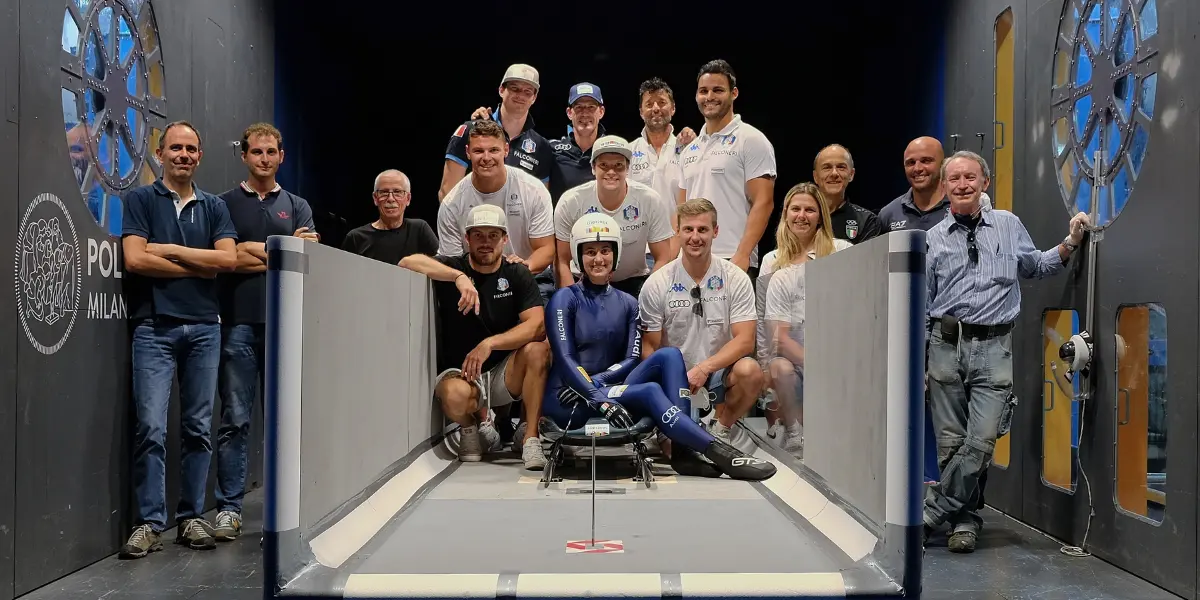
“And it is precisely the direct contact with professional athletes that, for us, mechanical engineers, is one of the most stimulating aspects of working in sport. The opportunity to engage with those competing at the highest international levels, gather their feedback, and translate it into measurable data represents a unique value” – explains Claudio Somaschini, Associate Professor of the Department of Mechanical Engineering. Over the years, DMEC researchers have also had the privilege of working with many athletes who are participating in the Milan–Cortina 2026 Olympic Games, such as Dominik Fischnaller, Simon Kainzwaldner, Emanuel Rieder, Andrea Vötter, Dominik Paris, Davide Ghiotto, Michele Malfatti, and Andrea Giovannini; many of whom have already won medals. When an athlete you have worked with steps onto the podium, it is inevitable to feel part of that result, even if behind the scenes: a silent yet tangible contribution.
Downhill Skiing: The Balance Between Stability and Aerodynamic Penetration
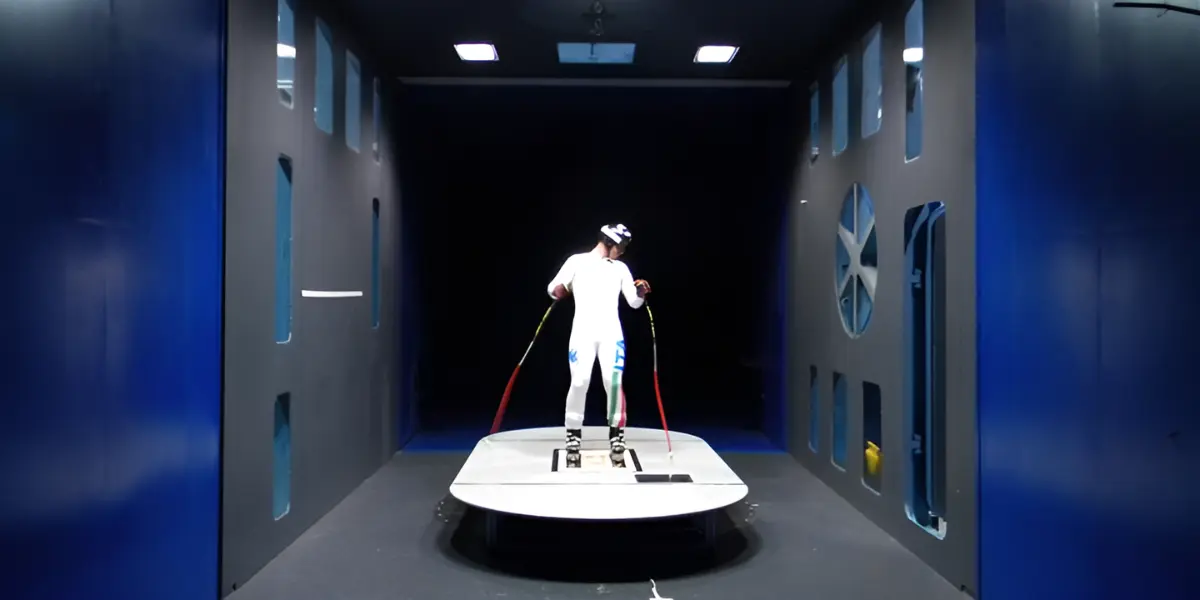
In downhill skiing, athletes reach extreme speeds on complex courses. The optimal tucked position can reduce the frontal area exposed to the wind, but it can only be maintained for brief moments on straight sections. In the Wind Tunnel, small variations in posture or materials can be analyzed across the different positions assumed by the athlete during a run.
Speed Skating: Individual Performance and Team Dynamics
In speed skating, aerodynamics also has a marked impact on performance, and the Wind Tunnel allows studying how minimal changes in torso, arm, or head position influence overall drag.
In this case, however, testing is not limited to the individual dimension. Team configurations, such as the three-athlete team pursuit, can also be analyzed. Here, attention focuses on the aerodynamic interaction among team members: the lead athlete generates a wake that alters the velocity field for those following. Relative distance, alignment, arm position, the distribution of total resistance, and pushing dynamics are examined to understand how to optimize the drafting effect and reduce the group’s overall drag.
Luge and Skeleton: Athlete and Equipment as an Integrated System
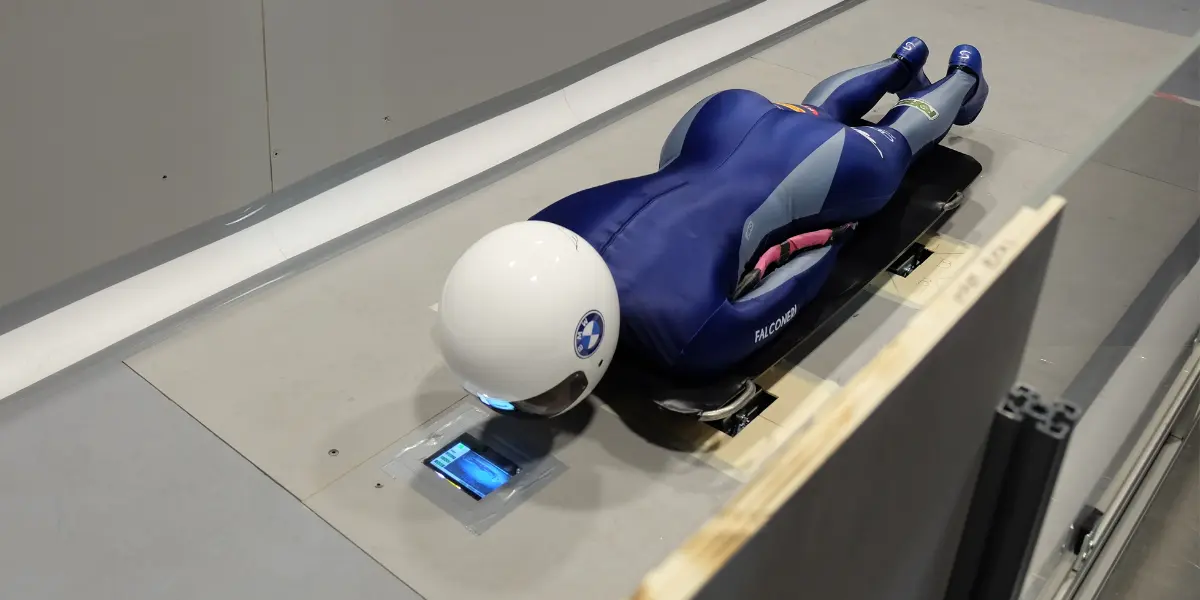
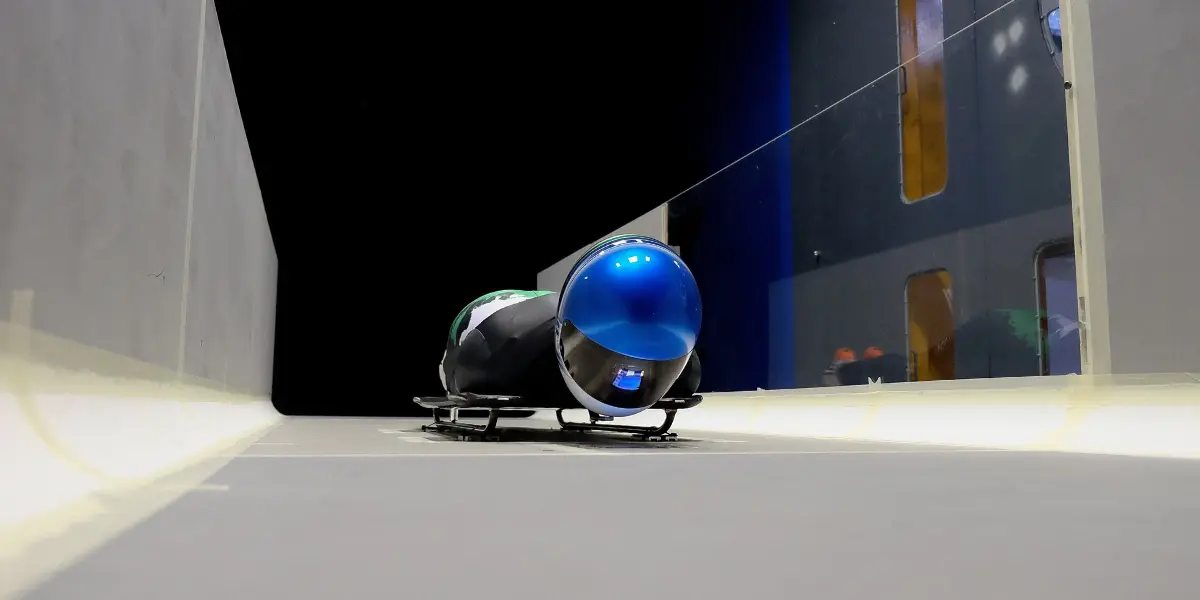
In luge and skeleton, the athlete and the sled form a single aerodynamic system, creating a classic “non-linear” coupling. Body position directly influences the flow distribution around the sled, which must therefore be designed and validated together with the specific athlete. In the Wind Tunnel, away from the dangers and distractions of a track descent, different static positions can be analyzed, assessing the effect of minimal variations: helmet height, shoulder alignment, and muscle tension that alters body shape.
Ski Jumping: When the Wind Tunnel Becomes a Training Ground
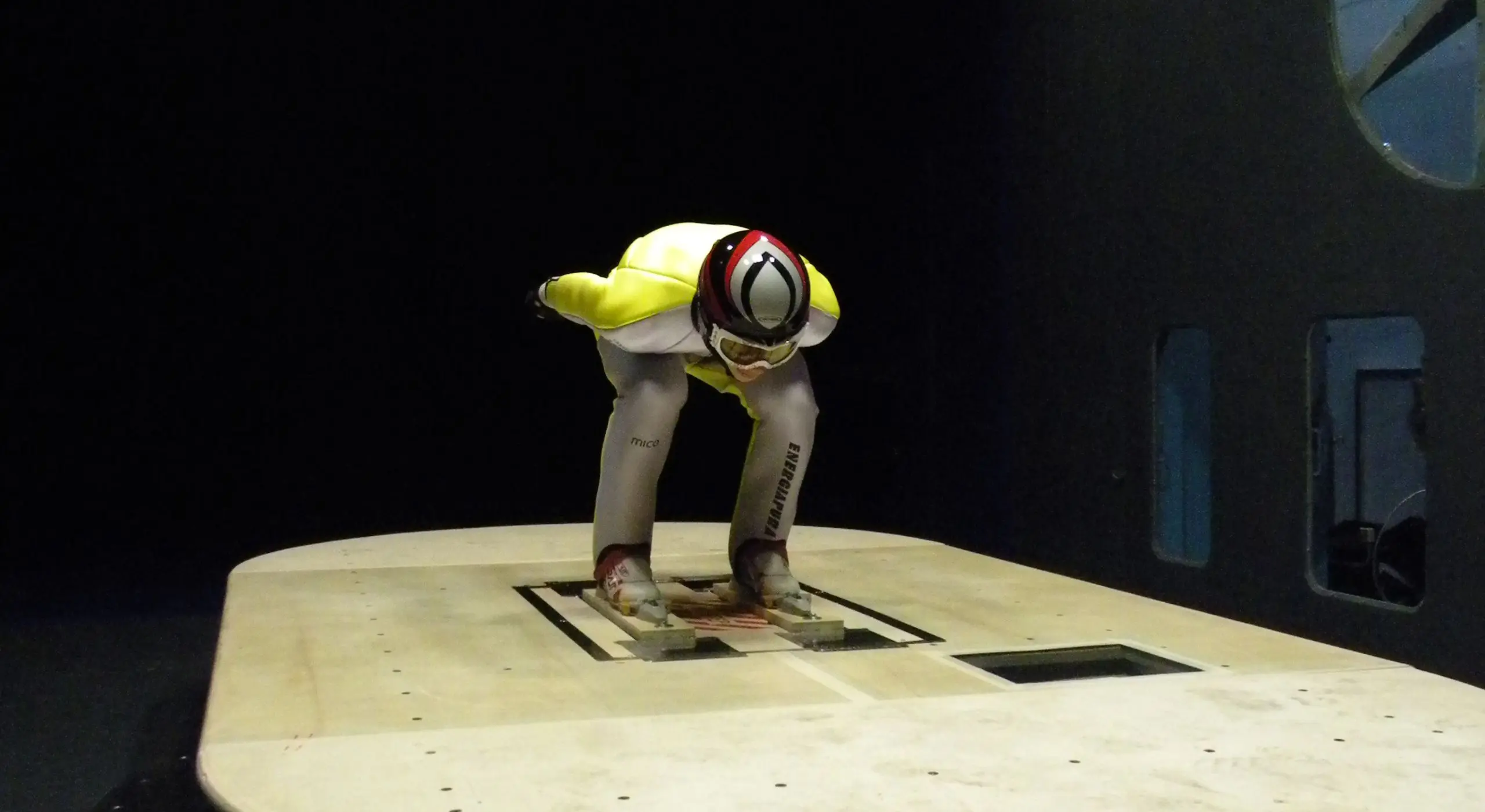
In ski jumping, the flight phase lasts only a few seconds, but during that interval much of the performance is determined. However, during this phase the athlete is primarily focused on stability and safety.
The Wind Tunnel radically changes this scenario. By eliminating risk and environmental uncertainty, the athlete can concentrate on details. Moreover, in a controlled environment it is possible to maintain the flight position for longer periods than those allowed in an actual jump, making it possible to train body awareness and postural stability under repeatable conditions.
In all these sports, aerodynamic optimization does not replace talent or athletic preparation, it enhances their potential. Knowing that one can rely on the best technically and scientifically validated solutions allows the athlete to focus exclusively on performance.
It is the meeting point between research and high performance, where every element, even something invisible like air, can make the difference between a placement and a medal.