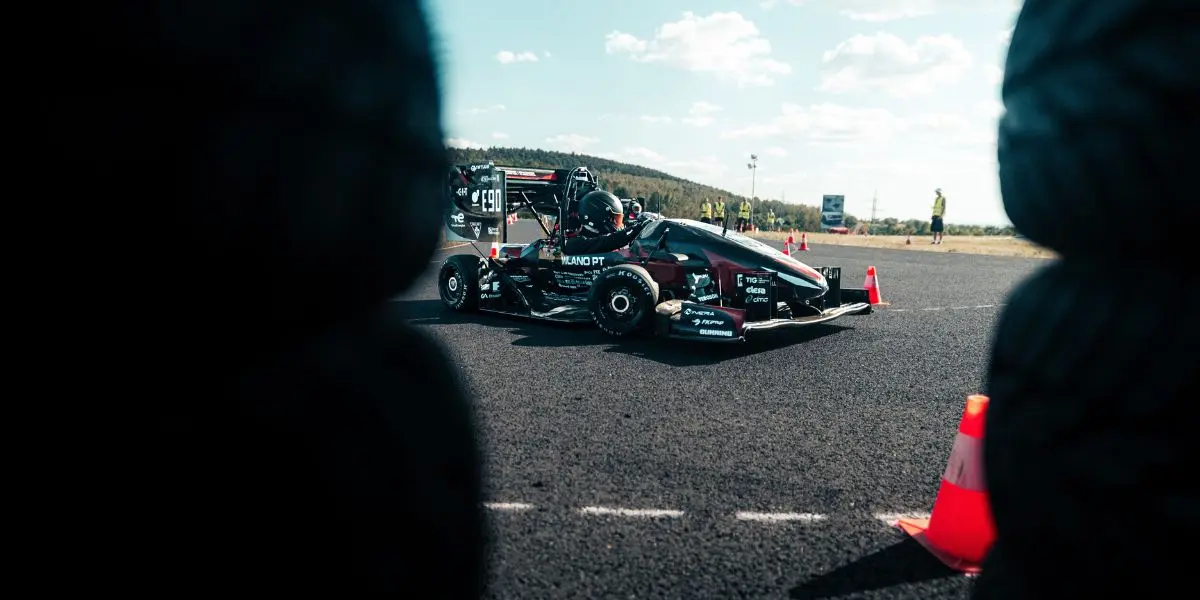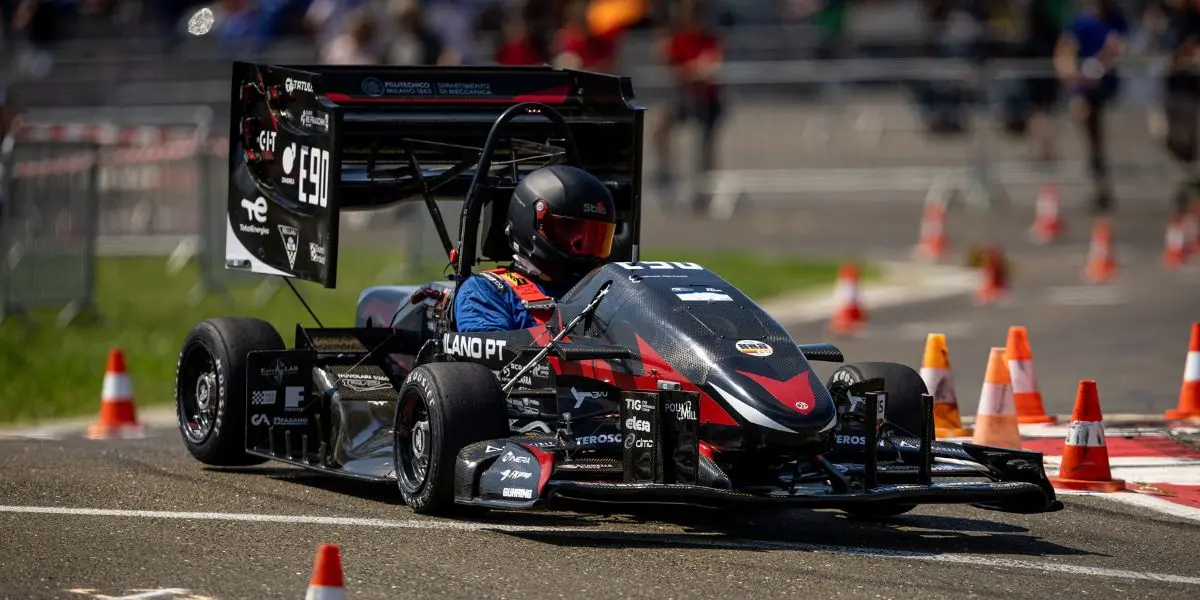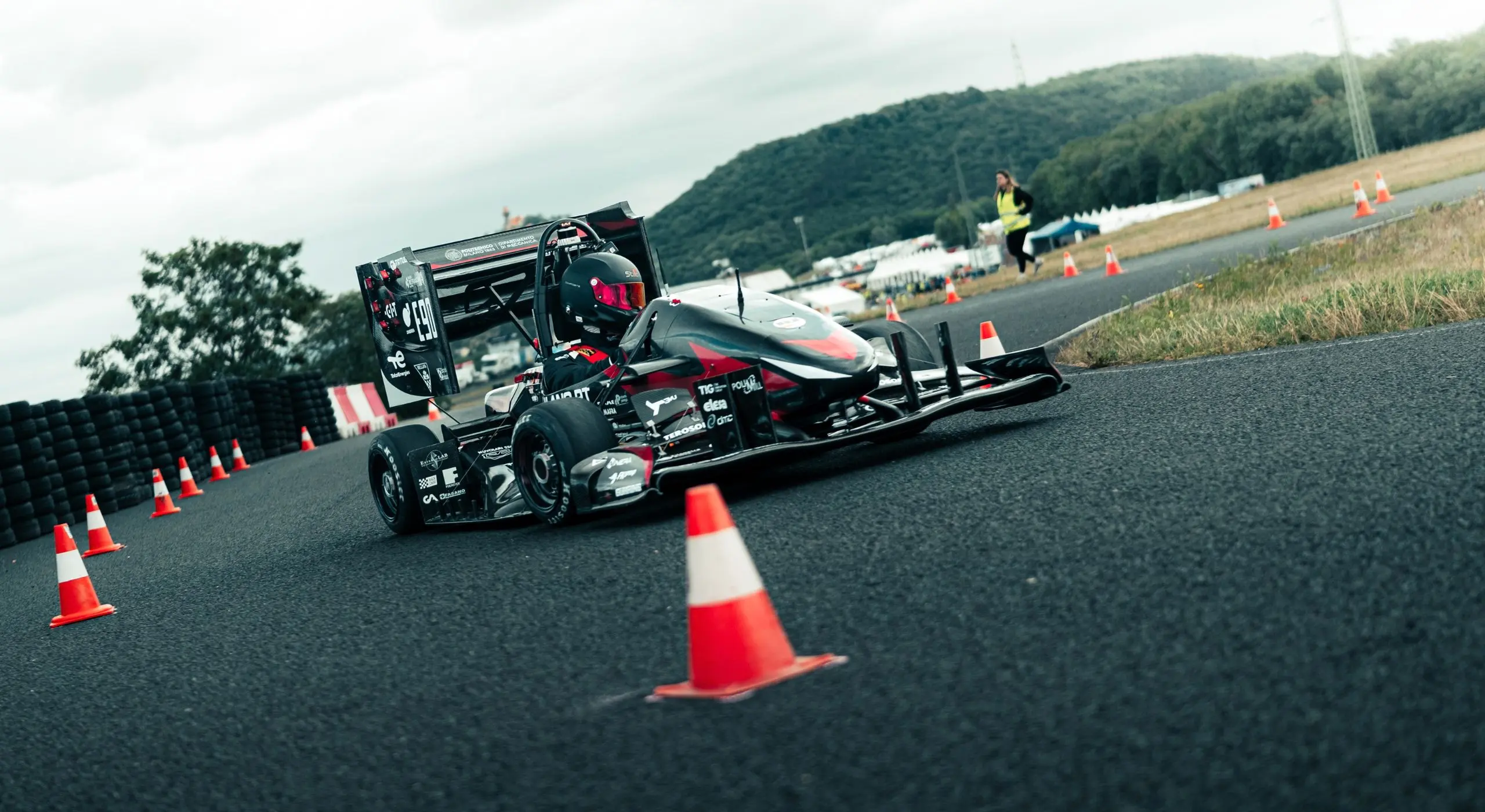
From the first design stages in September 2025, Dynamis PRC’s 2026 season was defined by ambition as much as by complexity. DP17 took shape around a series of significant technical developments: a custom inverter to refine powertrain performance and efficiency, a new kinematic architecture, and a Drag Reduction System designed to reduce energy consumption in Endurance, Formula Student’s most demanding test. When a major rule update required the rear wing to be redesigned while the car was already at an advanced stage, the season immediately became an exercise in adaptation.
The pressure did not remain on the drawing board. A complex geopolitical context, together with the highly specialised components and manufacturing processes involved, affected production times throughout preparation. In the final days before the competitions, the team assembled an entire battery pack from the ground up. At the same time, work on the static events took shape within the Department of Mechanical Engineering through technical reports, cost and emissions analyses, and a business proposal. The project was therefore tested across several dimensions: performance, reliability, environmental impact, economic feasibility, and the ability to make decisions under changing conditions.
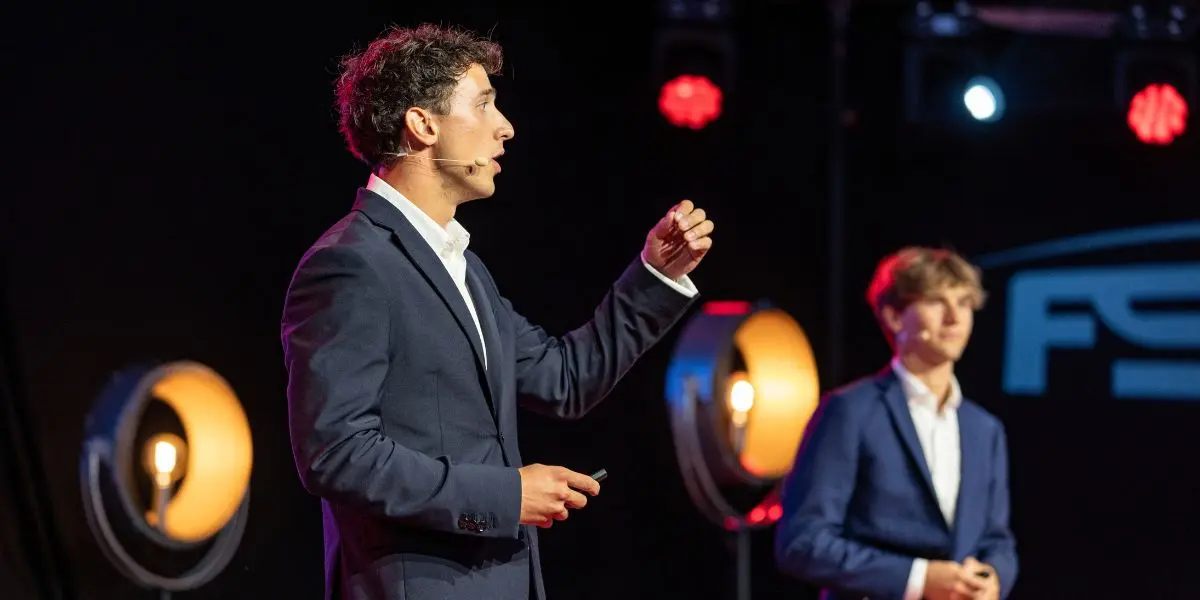
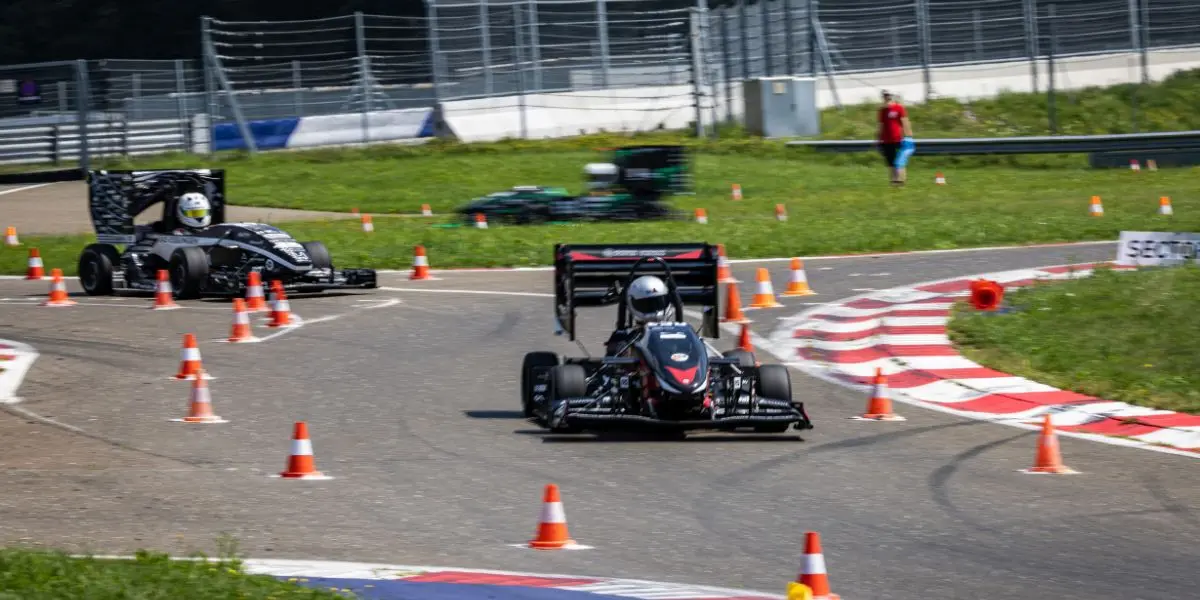
The three European rounds - Czech Republic, Austria and Germany - did not follow a linear path, but each revealed a different aspect of the project. In the Czech Republic, demanding technical inspections limited the driverless programme, while reliability issues called for a cautious approach in the driver-driven events. Seventh overall in the manual category, together with two third places in Cost and Manufacturing and the Business Plan Presentation, nevertheless confirmed a particularly strong foundation in the static disciplines.
Austria offered the first clear expression of DP17’s potential. Third place in Acceleration, achieved with the team’s all-time record of 3.480 seconds over 75 metres, provided a tangible measure of the powertrain development work. Later in the weekend, a rear suspension wishbone failure during Autocross required an overnight rebuild in the pits: by the following morning, the car was back on the Endurance starting line with four new pushrods. Careful thermal management in exceptionally high temperatures contributed to third place in Endurance, while first place in the Business Plan Presentation brought Dynamis to sixth overall.
Germany brought the season’s most difficult test. During driverless Acceleration, a powertrain anomaly caused DP17 to strike the finish-line equipment at 125 km/h, damaging the front wing and rear-wing supports. The response to the incident became one of the defining moments of the campaign. While repairs continued in the pits, a small group travelled overnight to Milan to retrieve the previous car’s front wing. The chassis was adapted, the prototype returned to the track the following morning, and Dynamis completed every driver-driven event, finishing sixth in Endurance and tenth overall.
Not every achievement can be measured only in the standings. This season was built through prototypes rethought under pressure, components remade overnight, data gathered on track and decisions shared across the team. DP17 remains, for Dynamis, an ambitious engineering project shaped through a demanding year of challenges and progress. Proud of the path travelled and of the results achieved, the team now looks to the next step: DP18.